Newsletter Subscribe
Enter your email address below and subscribe to our newsletter

 BySonu
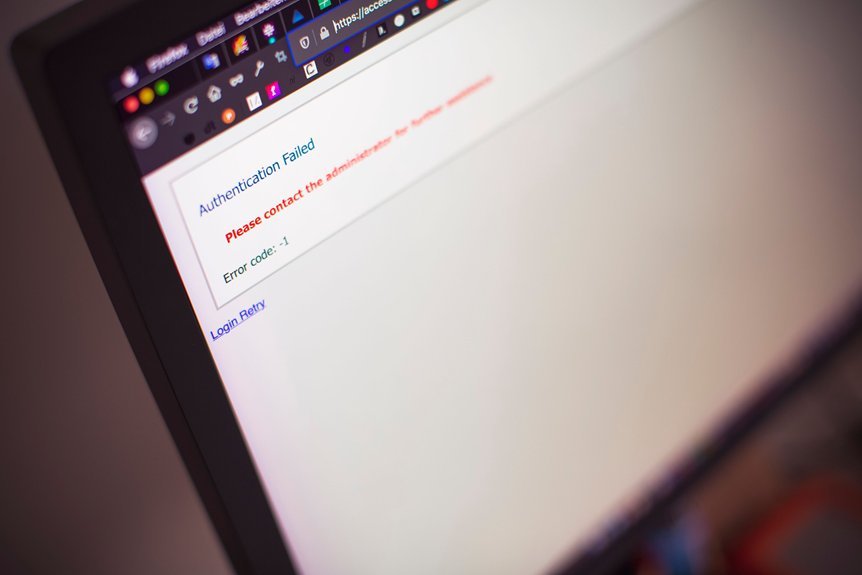
The 1681.64 login error indicates an authentication failure where credentials do not match the system’s expectations. It commonly stems from incorrect usernames or passwords, expired sessions, or clock drift between client and server. This issue can reveal broader gaps in credential lifecycle management. Understanding its formatting and behavior assists in formulating precise remediation steps. Immediate actions range from re-entering credentials to clock synchronization, but the underlying cause may require deeper investigation to prevent recurrence.
The 1681.64 login error refers to a specific authentication failure code encountered during attempts to access a system or service. It denotes a mismatch between credentials and expected validation, triggering immediate access denial.
Observers should examine error formatting for clear messaging and observe login behavior patterns, including retry limits and timeout responses, to guide secure, autonomous remediation without ambiguity.
Common causes behind the 1681.64 message typically involve mismatched credentials, expired sessions, or clock drift between client and server.
This examination remains detached and instructional, focusing on clear indicators for responsible admins.
Security auditing considerations reveal credential lifecycle gaps, while user onboarding gaps may introduce inconsistent access.
Recognizing these factors helps maintain resilience without compromising freedom or security.
To quickly resolve the 1681.64 error, follow a structured sequence that verifies credentials, sessions, and time synchronization. The guide presents topic ideas and actionable steps, avoiding fluff. It outlines concise troubleshooting strategies: re-enter credentials, refresh tokens, restart sessions, synchronize clocks, and confirm network stability. Each step emphasizes clarity, reproducibility, and independence from unrelated diagnostics.
Are logs being examined with precision, and what steps ensure their usefulness for preventing recurrence? Logs should be centralized, timestamped, and correlated with authentication events. Verify integrity, remove noise, and classify by failure mode. Use automated alerts for anomalies, cross-check with login troubleshooting notes, and document outcomes. Regular audits reinforce user authentication controls and promote proactive incident avoidance.
Yes, it can affect platforms differently; the error may cause unrelated performance issues on mobile versus desktop, raising security concerns due to inconsistent authentication flows and session handling across environments.
“Where there’s a will, there’s a way.” The error does not directly affect billing or access levels; it mainly concerns account security and session management, guiding administrators to verify permissions and refresh tokens without compromising freedom.
Yes, offline mode can be used for limited tasks, but users should anticipate plugin conflicts that may hinder functionality; disable conflicting plugins, then test in offline mode to ensure essential features remain accessible and stable.
A coincidence hints at timing: if a login attempt fails, wait a short, steadily increasing interval before the next login retry timing—typically 15–30 seconds, then 1 minute, considering server timeouts and congestion rather than haste.
Third person notes that yes, plugins can trigger the 1681.64 message. To avoid it, assess plugins instability and third party conflicts, disable suspect extensions, then reattempt login. Maintain system control while diagnosing, ensuring user autonomy remains intact.
In a quiet harbor, a lighthouse keeper confronts a stubborn door. The 1681.64 emblem, like a stubborn tide, signals mismatched keys—username, password, or timing—turning away the boat. The keeper, patient, checks the clock, reenters credentials, and tests the wind. With synchronized bells and steady nets, the door yields. Logs become the map, recurrence the current. Through measured steps, the harbor stays guarded, security renewed, and smooth passage restored for those who follow the course.