
Newsletter Subscribe
Enter your email address below and subscribe to our newsletter

The guide on 1681.108 login and setup help outlines secure access and quick entry. It emphasizes starting from a trusted device over HTTPS, confirming authentication, and completing only essential prompts. The process then covers creating a strong account, verifying contacts,…
 BySonu
The 16.0.10:8090 Access Guide outlines secure, auditable access from trusted clients over encrypted channels, with clear provisioning and least-privilege enforcement. It covers scalable authentication, role management, and consistent authorization across independent services. It guides troubleshooting of connectivity, TLS validity, and…
BySonu
The 92.168.1.2 IP address should appear as a strict four-octet decimal: 92.168.001.002 is not acceptable due to leading zeros; 92.168.1.2 uses minimal digits but must still conform to 0–255 in each octet. Common pitfalls include non-decimal bases, extra separators, or…
BySonu
The discussion centers on a methodical approach to accessing a router via the 168.1.213 address. It emphasizes verifying the device is on the correct LAN, identifying the router by branding, MAC, and SSID, and then using a browser to reach…
BySonu
The 189.88.35 IP Address Lookup Guide offers a structured method to locate, identify, and verify the entities behind this address. It emphasizes disciplined data collection, authoritative WHOIS records, and cross-checks across reputable geolocation databases. The approach aims for precise attribution…
BySonu
The article frames 192.168.1.1 as the private gateway often used in home networks, serving as the central point for routing local traffic to the Internet. It explains the common 192.168.x.x range, typical DHCP/NAT setups, and standard subnetting. It also notes…
BySonu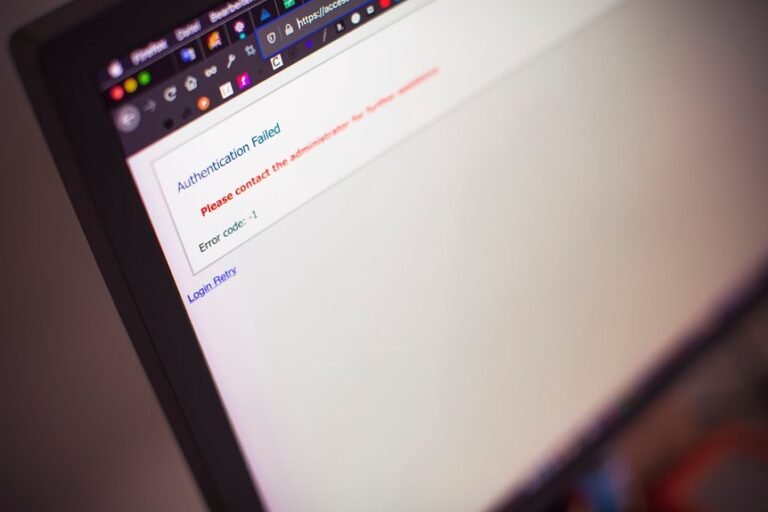
Root causes of 90.150.204 login issues include authentication delays, queueing jitters, and intermittent network latency. Verification begins with baseline path checks, traceroute, ping, and DNS sanity. If connectivity is sound, confirm credentials, account permissions, and session cleanup. Monitor server health…
BySonu
The IP 168.0.264 fails IPv4 syntax because an octet exceeds the 0–255 range. Each segment must be within bounds, and 264 violates this rule. Numeric integrity matters for routing and subnet calculations, and a single out-of-range octet renders the address…
BySonu
A clear process exists for accessing the 168.2.1 router interface. Start by identifying the device’s IP, typically 192.168.0.1, 192.168.1.1, or 192.168.2.1, and verify it with network tools. Then log in with valid credentials, enable strong passwords, disable default accounts, and…
BySonu
Fixing comma format errors requires attention to regional number formats, consistent grouping, and correct decimal markers. A disciplined approach checks thousands separators, decimals, and list separators for uniformity, avoiding punctuation that shifts meaning. Standards and templates guide edits, while automated…
BySonu